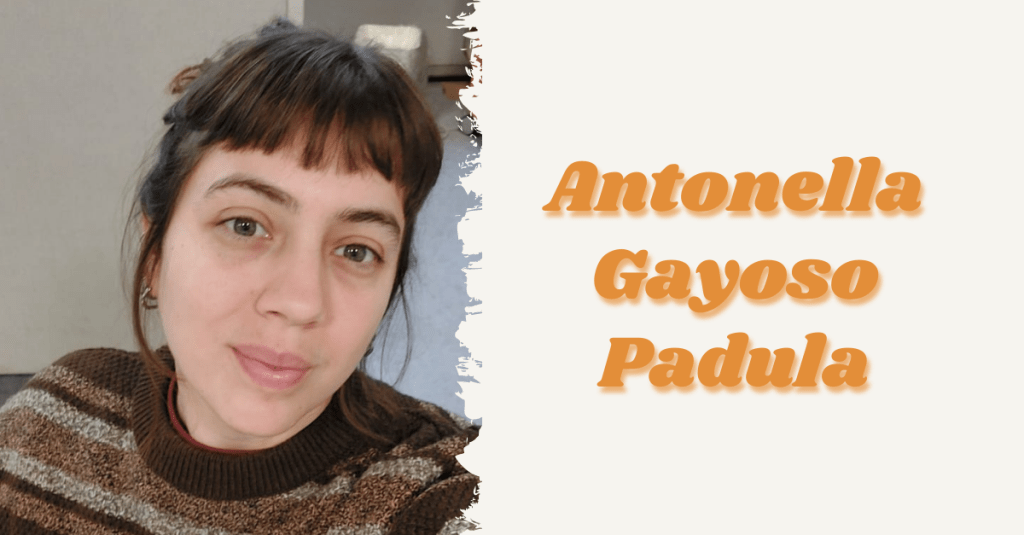
Antonella Gayoso Padula is a Postdoc at DTU Physics, Technical University of Denmark
What motivated you to pursue a career in physics, and how did you choose your area of specialization?
I’ve always been drawn to science as a way to understand and engage with the world. I don’t think I made a conscious decision about my career, but I was immediately captivated by crystallography and solid-state physics when I first encountered them. To me, crystallography brings together physics, mathematics, and even a sense of art.
Where have you studied, and what did your career path look like until now?
So far, my career has followed a winding path. I earned a degree in Chemistry at the University of A Coruña, my hometown in Spain, then completed a Master’s in Nanoscience and Nanotechnology at the University of Valencia. After my Master’s, I moved to Denmark, where I obtained a PhD in Physics from the Technical University of Denmark (DTU) and continue to work as a postdoctoral researcher in Physics at DTU.
What is the focus of your current research, and why is it significant?
My current research focuses on Dark-Field X-ray Microscopy (DFXM), a synchrotron-based X-ray technique at the European Synchrotron Radiation Facility (ESRF) that combines X-ray diffraction with optical imaging principles to produce real-space maps of strain and microstructure in bulk materials. By integrating DFXM with complementary methods such as Laboratory Diffraction Contrast Tomography (LabDCT) and three-dimensional X-ray Diffraction (3DXRD), I investigate the in situ evolution of microstructure and internal strain in polycrystalline aluminum during deformation. The significance of this work lies in advancing our understanding of plastic deformation and work hardening in aluminum, a material widely used in structural and engineering applications. As aluminum deforms, its macroscopic strength increases through work hardening, yet the underlying mechanisms linking microstructural evolution to macroscopic mechanical behavior remain incompletely understood. By directly observing strain and microstructural changes within the bulk, my research aims to bridge this gap and contribute to the development of a physically grounded mechanical model of aluminum plasticity.
Looking ahead, which area of work are you most excited to explore (in or outside of academia)?
Looking ahead, I am most excited to continue research involving X-ray and neutron diffraction, particularly through work at synchrotron and large-scale research facilities. In particular, I am keen to further explore the capabilities of the instrument I am currently working with. As a relatively novelty technique, it enables the investigation of a wide range of phenomena in bulk materials that have not previously been accessible. This opens the door to studying new length scales, deformation mechanisms, and dynamic processes.
What keeps you motivated in your research and work, and how do you maintain that drive?
My motivation in research is fundamentally driven by curiosity. Each time a question is answered, it naturally leads to several new ones, creating a continuous cycle of discovery. I find this process deeply motivating, as research feels like solving a complex puzzle in stages – each solution brings clarity while simultaneously revealing new challenges. This open-ended nature of research helps me maintain my drive. The sense that there is always more to explore, understand, and refine keeps me engaged and motivated over the long term, even when progress is incremental.
Do you engage in public outreach or science communication related to your research? If so, what does that involve?
No, I do not currently engage in public outreach or science communication related to my research.
Do you have any hobbies or activities outside of work that you are passionate about, and what makes them meaningful to you?
Outside of work, I am passionate about activities that involve physical movement and active engagement. Recently, I have been taking dance and basketball classes, which have become an important part of how I recharge. These activities are meaningful to me not only because of the physical exertion, but also because they provide opportunities to socialize with people outside my professional environment. They help me regain energy, stimulate creativity, and offer a more balanced and grounded perspective, which I find essential for maintaining both personal well-being and focus at work.
What are your thoughts on the importance of being a mentor and advisor to students and younger scientists, and what is your own approach?
I believe mentorship and advising play a crucial role not only for students and early-career scientists, but for everyone in the research community. Whether through a formal mentor or a broader professional support network, it is essential to have access to a safe and encouraging space—one where individuals can find motivation, guidance, and the confidence to ask questions. My approach to mentorship extends beyond teaching technical skills. I see it as equally important to encourage others to explore paths they may not yet know exist and to provide structured information, career guidance, and cognitive support. Rather than relying solely on the traditional mentor–student model, I strongly believe in building communities that facilitate open knowledge exchange and collective growth.
From my perspective as a woman in science, I am particularly aware that access to information and technical tools is not always equal. In fields such as programming, machine learning, and artificial intelligence—areas that are increasingly essential both in academia and in everyday life—women have, in many cases, entered later and with fewer opportunities. In a world increasingly shaped and driven by computational sciences, exclusion from these areas can result in a form of modern illiteracy and can limit our ability to participate in decision-making about which problems are considered important and worth addressing.
For this reason, it is especially important to create inclusive spaces, scientific community that functions as an open network—where women and minorities at any stage can seek support, knowledge is shared openly, questions can be asked without fear of judgment, and expertise flows in all directions.
Have any mentors played a significant role in your career, and how have they supported you?
I have not had formal mentors throughout my career, but I have been surrounded by friends and colleagues whom I could rely on—people I felt comfortable turning to when I had questions or needed guidance.
What advice would you give to young people, in particular women and minorities, who would like to pursue a career in science?
My advice to young people, especially women and minorities, who wish to pursue a career in science is to focus on the science itself. As challenging as it can be, try to separate the personal from the professional and approach science as something objective rather than a measure of your self-worth.
It is important not to base your entire identity on being a scientist. Stay curious beyond your field, and allow yourself to be interested in many different things. This is not meant to discourage you, but rather to protect you from the pressure that can come with the word SCIENCE—a field often associated with high expectations, constant comparison, competition, and, at times, prejudice.
Remember that science is not about proving yourself; it is not about you. It is simply a subject to explore—challenging, creative, and deeply interesting. Treating it as something engaging and enjoyable, rather than as a defining judgment of your value, can help sustain motivation and resilience over the long term.
 kvinderifysik.dk