
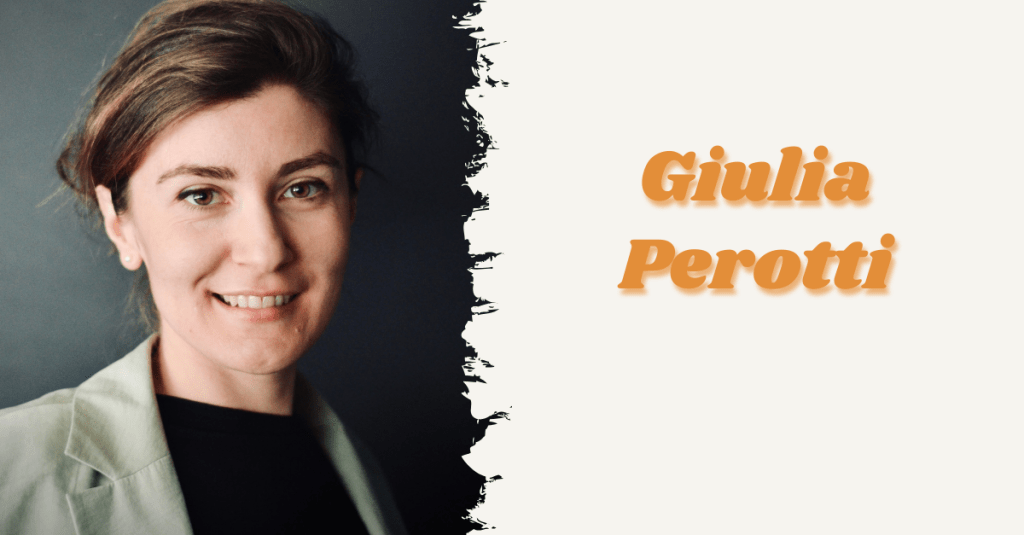
Giulia Perotti is an MPG Junior Group Leader at the Max Planck Institute for Astronomy (Heidelberg) and a Carlsberg Reintegration Fellow at the Niels Bohr Institute (Copenhagen).
What was your motivation to pursue a career in physics, and how did you choose the field you are now specialized in?
Actually, I originally pursued a career in chemistry. While working on my bachelor’s thesis, my supervisor suggested that I take on a project in astrochemistry – a discipline that studies molecules in space and how they influence the formation of stars and planets. I became so passionate about it that I decided to continue as a researcher in this highly interdisciplinary field, which brings together astronomy, physics, chemistry, and planetary science. I’m incredibly grateful to my advisor for introducing me to this area of research.
Unlike many of my colleagues, I never dreamed of becoming an astronaut, but I’ve always been fascinated by the bright night sky.
Where have you studied, and what did your career path look like until now?
My career path has been quite unique and characterized by interdisciplinarity. I began my studies in chemistry, first in Italy and then in Copenhagen, before earning my PhD in astrophysics at the University of Copenhagen. I was fascinated by how chemistry and physics intersect in space, particularly in environments where rocky planets are forming.
The transition from chemistry to physics was made possible thanks to the support of Anja Andersen and Jes Jørgensen, who played a fundamental role in helping me find my place within the astrophysics community.
During my PhD at the Niels Bohr Institute, thanks to my principal advisor I had the chance to shape my doctoral research according to my own interests. Those years set me up for a successful postdoctoral position at the Max Planck Institute for Astronomy (Heidelberg), which in turn enabled me to establish my own research group focused on the chemistry of planet formation less than three years after my PhD defense.
Can you share with us what your research is about and why it is important?
My research focuses on the chemistry of planet-forming disks around young stars – particularly the presence of water and other life-enabling molecules. My group and I use world-class observatories like the James Webb Space Telescope (JWST) and the Atacama Large (sub-)Millimeter Array (ALMA) to explore how the building blocks of life are assembled and delivered to young planets. By studying other solar systems in formation, we aim to better understand how our own Solar System came to be and how life may have originated on Earth.
There’s something extraordinary about tracing the origins of molecules that could one day support life on other worlds. I’m especially excited by the idea that we are witnessing, in real time, the very processes that once shaped our own Solar System, now unfolding in distant regions of the galaxy.
Looking ahead, what are your future research plans, and which areas of your work are you most excited to explore next?
Looking ahead, I’m excited to continue pushing the boundaries of what we can learn about the chemical makeup of planet-forming disks, with JWST and upcoming facilities such as the Extremely Large Telescope. One of my key goals is to trace how water and organic molecules are distributed in the inner regions of disks – exactly where terrestrial planets are expected to form. I’m particularly interested in understanding when and how these life-enabling molecules get incorporated into young planets, and whether we see diversity in this process across different systems.
I’m also eager to expand my research into connecting disk observations with planet atmospheres, to build a more complete picture of planetary birth and early evolution. As a junior group leader, I’m passionate about fostering collaborations that bring together observers, theorists, and spectroscopists to tackle these big questions from multiple angles.
Do you communicate your research to the public or do other types of outreach? If so, please tell us about it.
Yes – science communication and outreach are important parts of my work. I believe that sharing the excitement of space science with the broader audience not only inspires the next generation but also contributes to a better public understanding of how science works. I regularly give public talks, including lectures aimed at teachers, and I’ve participated in media interviews and podcasts about new space discoveries that you can access here.
I’m particularly passionate about reaching audiences who don’t typically see themselves reflected in science. That’s why I support initiatives that highlight diverse role models, like Kvinder i Fysik and MPIA Women+. I’ve also been involved in mentoring programs and informal events where I share my experience as both a scientist and a woman in physics. Communicating that there’s no single way to be a scientist – and that curiosity knows no gender, nationality, or background – is something I care deeply about.
Do you have any hobbies outside of work that you are particularly passionate about? If so, would you like to share some specifics about what makes this hobby special to you?
Yes, I’ve always loved creative and outdoor activities that give me space to disconnect and recharge. I enjoy painting, hiking, and I’ve recently started learning to play the cello. Painting helps me slow down and tap into a different kind of creativity – one that isn’t tied to deadlines or results. Hiking allows me to reconnect with nature, which often reminds me of the bigger picture and clears my mind after intense periods of research. The cello, on the other hand, is humbling in the best way – it’s teaching me patience and the joy of being a beginner again. These hobbies give me balance and often bring fresh perspectives that feed back into my scientific work.
What are your thoughts on the importance of being a mentor and advisor to students and younger scientists, and what is your own approach?
I believe mentoring is one of the most important responsibilities we have as scientists, especially when it comes to creating a more inclusive and supportive research environment. As a mentor and junior group leader, I try to create an environment where team members feel safe, respected, and empowered to ask questions without fear of judgment. I see mentorship as a two-way learning process: while I guide students in developing their technical and scientific skills, I also listen and learn from their experiences and perspectives. I’m mindful of the fact that not every student comes from the same background, and I actively work to make sure that my group’s culture reflects equity, kindness, and respect.
One of my main goals as a mentor is to help young scientists build confidence in their own voices and ideas – so they not only grow as researchers but also as people who can shape the future of science (and of academia in general) for the better.
Have you had mentors of your own during your career, and how have they supported you?
Yes, I’ve been fortunate to have mentors who have made a real difference in my career and in my life. What stood out about the best mentors wasn’t just their scientific guidance, but their willingness to see and support me as a whole person – not just as a researcher. They encouraged me to ask bold questions, to become independent, and to take ownership of my ideas.
Some of my mentors also showed me, by example, that it’s possible to lead with kindness and integrity in academia – something that I try to carry forward in my own mentoring. They gave me the space to grow while also stepping in when I needed advice or reassurance. Looking back, those moments of belief and encouragement, especially during times of doubt, made all the difference.
What advice would you give to young people, in particular women and minorities, who would like to pursue a career in science?
My main advice is: don’t be discouraged if you don’t see many people with similar backgrounds in the field. Science needs diverse perspectives, and your background can be a strength, not a weakness.
Find mentors who support you and value your growth – not just your results. Build a network of peers who can help you navigate challenges and share experiences. It’s also important to set boundaries and take care of your well-being – academia can be demanding, and protecting your energy is part of sustaining a long-term career.
Finally, be open to unexpected paths. There’s no single way to become a scientist, and often the most interesting ideas come from people who bring different viewpoints to the table.
Do you have any thoughts on potential strategies for helping to advance the careers of underrepresented groups in physics in general?
Yes – if we want to see real change, we need to move beyond just increasing numbers and focus on creating environments where people from underrepresented groups can actually thrive.
Some concrete strategies include:
- Improved mentorship: It’s crucial to ensure that early-career researchers have access to mentors who actively support their development and advocate for them when opportunities arise.
- Transparent hiring and promotion processes: Clear, fair criteria help reduce the impact of unconscious bias.
- Flexible working conditions: Work-life balance and family-friendly policies can make a big difference, especially for women and others who often carry a heavier care burden.
- Representation in leadership: Having diverse voices in decision-making roles helps change the culture at its core.
- Community and networking: Creating spaces where people from underrepresented groups can connect, share experiences, and support one another is key.
Ultimately, inclusion should be seen as part of research excellence—not as something optional or secondary.
 kvinderifysik.dk