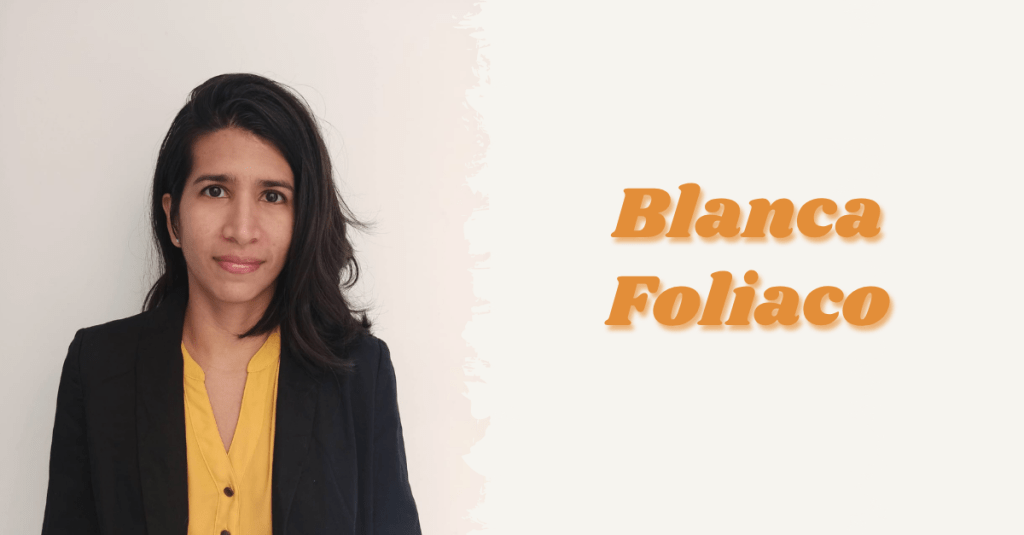
Blanca Foliaco is a Postdoc at University of Southern Denmark (SDU) at Institute of Mechanical and Electrical Engineering in Sønderborg.
What motivated you to pursue a career in physics, and how did you choose your area of specialization?
I chose to become a mechanical engineer because, ever since I was a child, I’ve been fascinated by how things work, how they’re built, and how they can be improved. During my studies, I initially gravitated toward mechanical design, but I later discovered thermodynamics and realized it was the field I truly wanted to focus on. For me, the most natural and compelling application of thermodynamics is in the HVAC sector – especially since I grew up in a very warm city where these systems are widely used and essential.
Where have you studied, and what did your career path look like until now?
I completed both my undergraduate and postgraduate studies in Colombia, in my hometown of Barranquilla, and had the opportunity to undertake a short research internship in Odense, Denmark.
Currently, I’m working as a postdoctoral researcher. Before pursuing my PhD, I spent several years in industry, where I worked as a maintenance engineer, designer, and project supervisor. My projects spanned a variety of sectors – including coal mines, meat packing plants, salt and palm oil processing facilities, and HVAC system installations in buildings. This hands-on experience helped me develop practical engineering skills that have proven invaluable in both my research and teaching.
What is the focus of your current research, and why is it significant?
My current research focuses on developing more efficient heat pump systems that use natural refrigerants for electric ferries. This work is important because it aims to replace synthetic refrigerants – which can have a significant environmental impact – with more environmentally friendly alternatives, such as CO₂. In addition, improving the efficiency of thermal systems is always valuable, as it contributes to energy savings, enhances sustainability, and ultimately supports efforts to reduce our impact on the planet.
Looking ahead, which area of work are you most excited to explore (in or outside of academia)?
I’m particularly interested in the maritime sector. Ever since my early days as an engineering student – and even before that, when I took short courses with my country’s navy as a child – I’ve been drawn to naval engineering and everything related to ships. Now, I see a unique opportunity to bring together that long-standing interest with my current passion for thermal systems. It’s exciting to align a personal aspiration with my professional expertise, and I’m taking concrete steps to move in that direction.
What keeps you motivated in your research and work, and how do you maintain that drive?
What keeps me motivated is the constant opportunity to learn – whether it’s through my own research or from my colleagues. I find great inspiration in connecting with people who are doing remarkable work in their own fields. It’s also incredibly rewarding to know that what I’m doing today has the potential to make a meaningful impact in the future, especially by contributing to the development of more sustainable systems. Additionally, as a woman and an educator, I’m aware that there are young girls and women who are watching and for whom I may be a role model. I feel a responsibility to show them that they, too, have a place in science and engineering – that it’s possible to succeed, lead, and contribute meaningfully in these fields. That sense of purpose drives me every day.
Do you engage in public outreach or science communication related to your research? If so, what does that involve?
As a postdoctoral researcher, I contribute to the dissemination of my work through peer-reviewed publications, poster presentations, and participation in specialized conferences. Beyond academic channels, I’m also actively involved in science communication and outreach through organizations that promote knowledge sharing and inclusion – particularly those focused on supporting women and girls in STEM. For example, I collaborate with initiatives like the Organization for Women in Science for the Developing World (OWSD), which aims to build networks, foster cooperation, and strengthen scientific capacity through community engagement and mentorship.
Do you have any hobbies or activities outside of work that you are passionate about, and what makes them meaningful to you?
I really love arts – especially music and film – which I find to be powerful and uplifting forms of expression. I also enjoy solving logic problems and puzzles; there’s something very satisfying about uncovering patterns and building solutions step by step. And when I’m not immersed in research or riddles, you’ll likely find me on the soccer field. I play goalkeeper – not just because I like the challenge, but because there’s something fun (and a little dramatic) about being the last line of defense. Plus, it is a pretty good workout!
What are your thoughts on the importance of being a mentor and advisor to students and younger scientists, and what is your own approach?
For me, mentoring is not only a way to give back to society, but also a responsibility – especially as a woman in engineering. I’m deeply committed to supporting female empowerment, because I know firsthand how powerful it is to see someone who looks like you succeeding in a space where women are still underrepresented. Just as other women inspired and guided me, I want to be that reference point for younger women and girls. My approach to mentoring is grounded in understanding that each new generation learns and connects differently. I try to meet students where they are – adapting to their learning styles and encouraging their curiosity. But above all, I believe in leading by example. It’s not just about offering advice – it’s about showing, doing, and teaching others how to do it too.
Have any mentors played a significant role in your career, and how have they supported you?
Yes, I’ve been lucky to have great mentors who’ve made a real difference in my life. My first mentor was a woman – an outstanding engineer who became my earliest example of what a successful and inspiring female professional could be. Over time, she also became a close friend and has continued to support me throughout my journey. My PhD advisor also played a big role. He believed in me and in my work, and supported me in every way he could – both academically and personally.
What advice would you give to young people, in particular women and minorities, who would like to pursue a career in science?
My advice is: don’t give up – even when things feel slow, uncertain, or really hard. It’s completely normal to lose motivation sometimes, but what matters most is that you keep going. There’s always a way forward.
I’d also say: don’t try to do everything on your own. One of the most important things you can have is a support system. Your classmates, friends, teachers, and coworkers can help you more than you think – they’ll remind you of your strengths and help you stay on track when things get tough. And especially for women and minorities: you belong in science. Your ideas matter, your voice matters, and the world needs what you bring. Keep showing up- because others are watching, and you’re opening the door for them too.
 kvinderifysik.dk