

We are very excited to introduce the 2025 KIF Prize nominees! These amazing women have been nominated by their colleagues, supervisors and peers for their incredible work and for being amazing role models in STEM.
This year, the KIF prize will be awarded for the 15th time. The goal was to attract nominations across all fields and sectors and we are proud of the diversity among the nominees. We thank everyone who took the time to send in their nominations as the KIF prize is becoming more recognized in the community.
Big congratulations to all the nominees!

KIF PRIZE 2025 NOMINEE
Carolina von Essen
About Carolina von Essen
I am currently a Senior Data Scientist at Grundfos, where I leverage artificial intelligence to devise innovative solutions to some of the company’s most pressing challenges. In addition to my primary role, I work at DTU Space, where I continue to indulge my passion for astronomy. My career path includes roles as an Assistant Professor and Post-Doctoral Researcher at Aarhus University, Denmark, and at the Faculty of Physics at Vilnius University, Lithuania. My specialized expertise lies within the captivating realm of exoplanetary sciences, searching for life on other worlds. I earned my PhD in Natural Sciences from Hamburg University in 2013, and my Master’s degree in astrophysics from the National University of La Plata, Argentina, in 2010. Throughout my career, I have been dedicated to improving my work environment. I am also deeply committed to mentoring women in STEM and actively participate in Diversity, Equity, and inclusion agendas, along with gender committees. My efforts are focused on enhancing overall conditions for women in the workplace, ensuring a supportive and equitable environment for all.

KIF PRIZE 2025 NOMINEE
Chamilla Terp
About Chamilla Terp
I’m currently pursuing a Master’s degree in astrophysics at the University of Copenhagen and will begin writing my thesis in August. I’ve been fortunate enough to do a lot of exciting and challenging research during both my Bachelor’s and now Master’s studies at the Cosmic DAWN Center, where I get to work with incredible data from the James Webb Space Telescope (JWST). At the moment, I’m studying some of the earliest galaxy overdensities – so-called protoclusters – which are the precursors to the massive galaxy clusters we observe today. In particular, I focus on their neutral gas content: the amount of neutral hydrogen in and around galaxies within these overdensities. My goal is to better understand their role in cosmic reionization, believed to be the Universe’s last major phase transition. Understanding this period in the Universe’s history will help us understand how the first large-scale structures formed and how galaxies evolved in the early Universe. Doing this involves a lot of fun physics, statistics, and programming!
Besides that, I work as a guide at the Copenhagen Planetarium, where I do everything from hosting guided tours and giving lectures to teaching courses and science shows. I get to share my passion of astrophysics with a wide audience and (hopefully!) spark just a little bit of curiosity in the guests. This year, I’m also a part of the jury for the “Unge Forskere” competition, which is something I’m really excited to contribute to!

KIF PRIZE 2025 NOMINEE
Dongshuai Li
About Dongshuai Li
Dongshuai Li is a Senior Reseracher in the Atmospheric Electricity research group at Technical University of Denmark (DTU Space). In her research, she focuses on unraveling the mysteries of lightning and its many manifestations, including conventional lightning in clouds and to the ground, and upper atmospheric lightning such as blue jets and red sprites. She has developed models and methods to better understand, for instance, how lightning initiates inside thunderstorms, how it propagates within the clouds and how it attaches to natural and human-made structures. Her current interests are to understand the plasma physics of lightning on microsecond time scales, addressing the scientific and technical challenges in determining the role of streamers and leaders at the heart of lightning physics.

KIF PRIZE 2025 NOMINEE
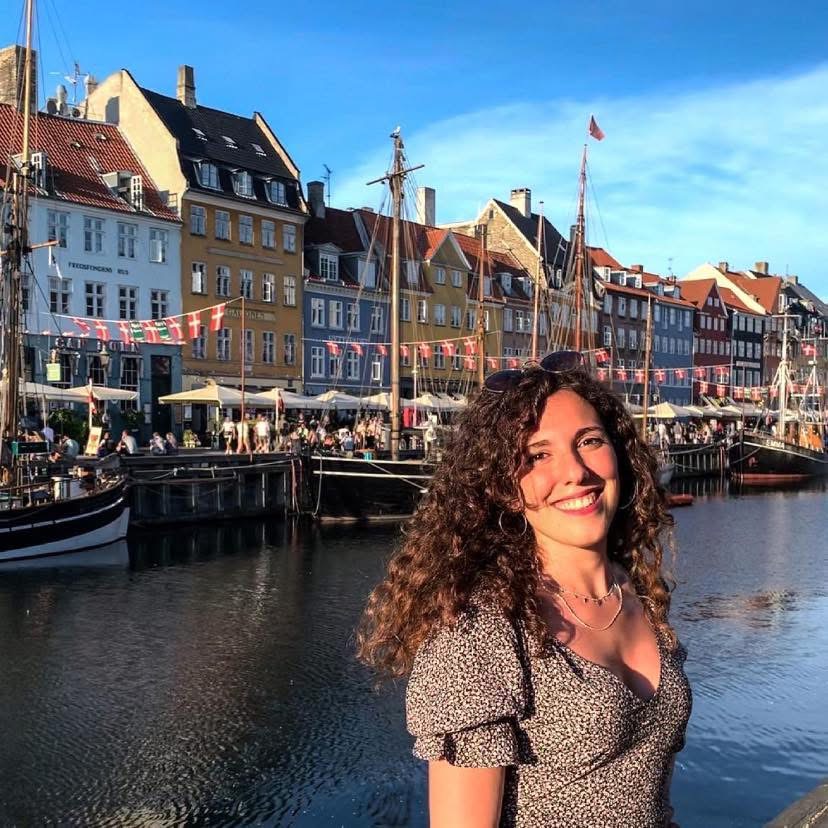
Dot Pio
About Dot Pio
Dot Pio is a quantum engineer and STEM communicator, studying and working at the forefront of quantum technology. Through her platform @mindfulphysicist, followed by over 29 thousand people, she shares everyday life in STEM — the challenges, the passion, the curiosity, and the authenticity. She shows that everything is possible if you show up fully, and takes a philosophical approach to science and life. Dot challenges outdated ideas of what a physicist “should” look like, and instead shows what it can mean to be authentic — both sharp and soft, technical and creative, showing up as you are, in full bloom. Being a curious thinker and having studied physics in various places across the globe, she brings a fresh and creative lookout on physics, whether she’s speaking at International Women’s Day, helping organize outreach through physics networks, or teaching math at DTU, Dot’s mission is to bring people in. She is helping shape a future where physics has room for more kinds of people — and more ways to belong.
KIF PRIZE 2025 NOMINEE
Ersilia Guarini
About Ersilia Guarini
I work as an Associate Patent Attorney at 3Shape in Copenhagen, helping protect cutting-edge dental tech that is improving healthcare worldwide. My day-to-day involves turning brilliant ideas into patents and talking with inventors across the company to understand their groundbreaking inventions. It’s a fast-paced, challenging, but incredibly rewarding job!
Before diving into Intellectual Property, my head was quite literally in the stars. I earned a Ph.D. in astrophysics from the Niels Bohr Institute in 2024, studying high-energy neutrinos from cosmic explosions. My academic path started in Italy, where I explored theoretical physics and solar axion-like particles. So no, my journey hasn’t been linear—but it’s been exciting every step of the way!
One constant throughout? Science outreach. I’m passionate about making science accessible and showing young minds that there’s a place for everyone in Physics and STEM in general. Representation matters, and I love being part of that change.
Outside of work, you’ll find me painting, spinning around a pole as a “polerina”, museum-hopping, or globe-trotting with my partner in search of amazing food.

KIF PRIZE 2025 NOMINEE
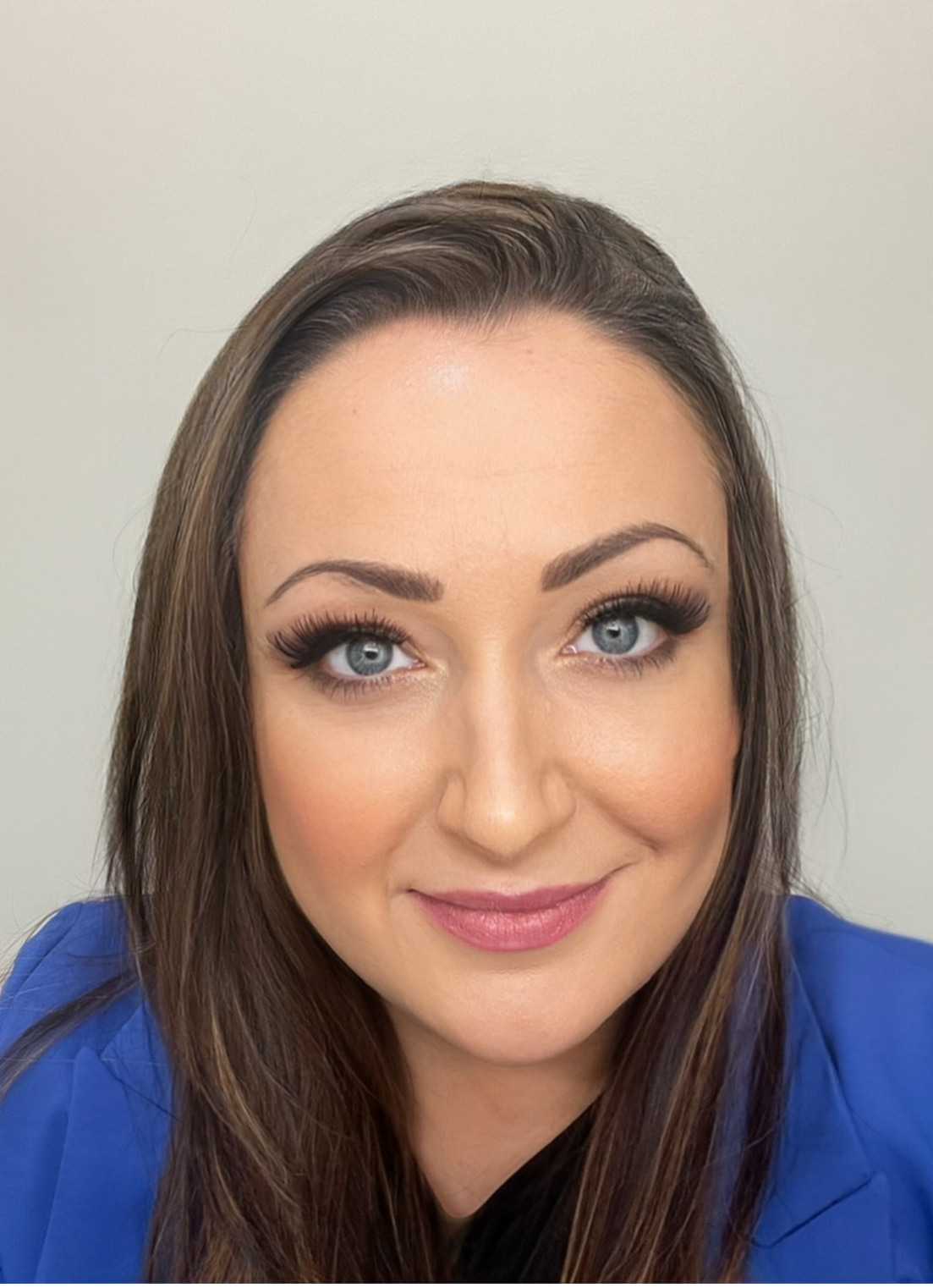
Helle Kogsbøll Leerberg
About Helle Kogsbøll Leerberg
Today data is gathered in immense amounts, and as an experimental physicist, I clearly see the exciting opportunities that it brings. Along with my colleagues, I help companies use data to gain insights into their business based on modern technologies. The most important part of my everyday work is therefore to create a strong relationship between people and data. With the foundational knowledge of data, programming and technology established through my physics education, I today utilize my specialized knowledge of Data Engineering to support customers with designing and implementing data platforms and leading the technical aspect of projects. In the office, I aim to create a space with my colleagues where we can share our individual specialized knowledge, such that we can be inspired by and learn from each other. I hope that my colleagues – and especially the younger colleagues – feel and know that they can always come to me for support on everything data, whether it is process or implementation.
KIF PRIZE 2025 NOMINEE
Natalie Anne Bebbington
About Natalie Anne Bebbington
Natalie Bebbington is a Nuclear Medicine Physicist, optimising medical imaging for the diagnosis and monitoring of cancer amongst other diseases, and is currently employed as a Senior Key Expert at Siemens Healthineers Denmark, providing scientific support and education for hospital Nuclear Medicine departments nationally and internationally, and advancing clinical practice through research. Natalie is recognised globally both in education and research for her expertise in optimising CT in hybrid PET-CT and SPECT-CT imaging. Having completed her PhD in 2021, she is now working towards a higher doctorate. Natalie has a strong passion for mentoring junior researchers, and strives to make research accessible for all professions working in Nuclear Medicine.

KIF PRIZE 2025 NOMINEE
Rayssa Bruzaca de Andrade
About Rayssa Bruzaca de Andrade
Rayssa works as an R&D Optical Engineer in the Quantum Technologies Group at NKT Photonics, developing hardware modules based on Fiber Laser Technologies for quantum technology fields.
Rayssa holds a Ph.D. in physics from the University of São Paulo in Brazil and completed her postdoctoral research on quantum sensing using squeezed states of light for probing biological samples at the Technical University of Denmark.
Beyond her professional work, she is actively involved in outreach activities about quantum technologies. Recently, she co-organized the group QBrazil, an initiative to promote quantum technology activities in Portuguese focused on the Brazilian community.
She is also passionate about attracting young people, especially young girls, to STEM. Currently, she is an active role model for the Danish organization High5Girls.
Rayssa is the mom of a smart 18‑month‑old girl whose life brings her a new source of joy in every little moment.

KIF PRIZE 2025 NOMINEE
Teresa Pfau
About Teresa Pfau
I am an experimental Ph.D. student at the Center for Hybrid Quantum Networks (Hy-Q) at the Niels Bohr Institute, University of Copenhagen. In the quantum optomechanics subgroup, we engineer specialized membranes and investigate various properties of these ‘large’ mechanical objects.
In my project, we aim to couple (i.e., create an interaction between) one of these macroscopic mechanical membranes and a spin quantum state. We use a nitrogen-vacancy (NV) color center in diamond as the spin system, whose spin state is highly sensitive to surrounding electromagnetic fields. With a nanomagnet on the membrane, we can generate a varying magnetic field as the membrane oscillates, which can be sensed by the spin. Through this coupling between the spin system and the membrane, the motion of the mechanical membrane can be imprinted onto the spin state, and vice versa.
Beyond physics at NBI/KU, I also enjoy being actively involved in there. I am an active member of the NBI PhD and Postdoc Network (NPN), and I have been involved in the PhD committee at the Faculty of SCIENCE for two years. Both roles aim to improve the work and social environment for everyone.
The prize committee will select a winner who will be announced at an award ceremony at the DFS annual meeting on May 15th, 2025 at 15:00 at the Demant Hall, DTU, 2800 Lyngby, where the award ceremony will take place.
The winner will be notified in writing and invited to give a talk at the DFS annual meeting.
The KIF Prize is awarded annually to raise awareness about the significance of women in physics. The prize aims to recognize a person with a background in the physical sciences (physics and engineering) as a role model, whether they work in research, industry, the public sector, teaching, or similar. The prize will be awarded to a person who, through their professional work, outreach, mentoring, and volunteering, inspires women and other minorities in the physical sciences, motivates young women and girls to pursue a career in STEM, and advocates for gender equality, diversity, and inclusion in the broader community.
 kvinderifysik.dk