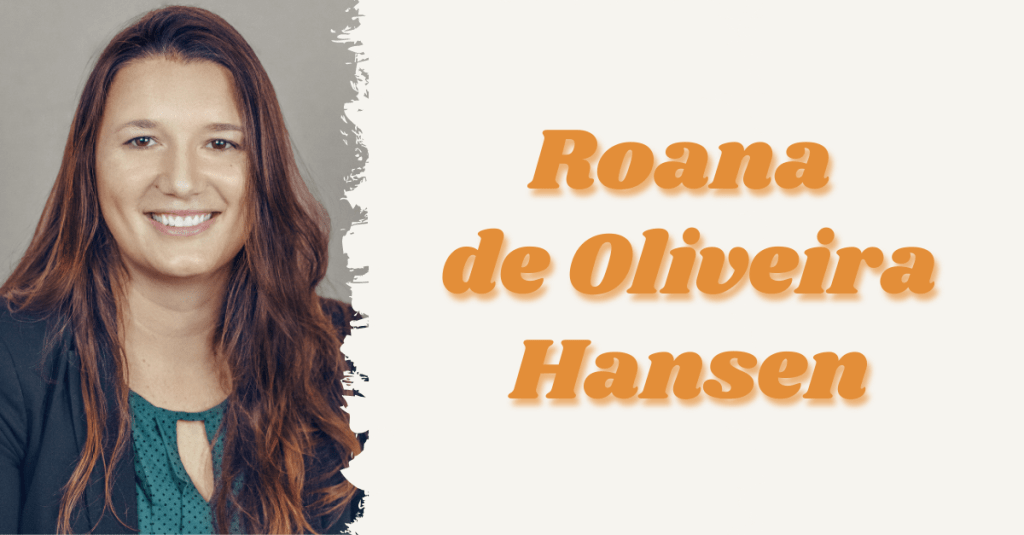
Roana de Oliveira Hansen is Associate Professor at University of Southern Denmark (SDU) at Mads Clausen Instituttet (MCI) in Sønderborg.
What was your motivation to pursue a career in physics, and how did you choose the field you are now specialized in?
Since I was a little girl, I have always been fascinated by the night sky and wanted to understand how the universe works. I spent many nights exploring the sky with my telescope. When I learned about the theory of relativity from a documentary, I realized that the reality of the universe is so different from the one we experience on our little planet. From that day, I knew I wanted to study physics. Initially, I considered becoming an astronaut or an astrophysicist. However, as I delved deeper into my studies, I developed a keen interest in the nanoworld. It was incredible to see how the small and the enormous are connected through the universe’s driving forces. Over time, I directed my studies towards the nanoworld, where I saw great potential to apply this beautiful knowledge to technologies.
Where have you studied, and what did your career path look like until now?
I studied physics at the Federal University of Rio Grande do Sul in Brazil. After completing my master’s studies, I had the opportunity to pursue my PhD at the University of Southern Denmark. I am very happy living in Denmark and have been here since 2008.
Can you share with us what your research is about and why it is important?
My passion lies in applying micro- and nanotechnology to develop new sensor solutions. Our human senses are the interface between ourselves and our world and greatly inspire my research. Artificial sensors with specific functions can significantly impact various fields, such as healthcare, security, and sustainable food production. I hope the sensing technologies I am developing will help society reduce food waste, ensure fast and accessible healthcare diagnoses, and promote sustainable development.
Looking ahead, what are your future research plans, and which areas of your work are you most excited to explore next?
I am excited to explore artificial sensors that mimic all human senses, drawing inspiration from nature. Additionally, I am working on technologies to incorporate other senses, such as smell, into our digital communication.
Do you communicate your research to the public or do other types of outreach? If so, please tell us about it.
Yes, I often conduct workshops with children about science and technology. They are very excited to play with the sensors I am researching, and I receive valuable feedback from them. They can see things from a different perspective than we can. Over the past few years, I have also been very active in sharing my research with the Danish media, including TV, radio, and newspapers. This has sparked curiosity and interest in science among the public.
Do you have any hobbies outside of work that you are particularly passionate about? If so, would you like to share some specifics about what makes this hobby special to you?
As a mom and researcher, I spend time with my husband and our two boys. I also love dancing, writing, hosting people at home, and pondering philosophical questions. Dancing is a great way to relax and remove brain barriers. I always end up having ideas during my Zumba classes.
What are your thoughts on the importance of being a mentor and advisor to students and younger scientists, and what is your own approach?
Mentoring and advising students and younger scientists is vital. It offers guidance, support, and inspiration for future researchers. I aim to be approachable, empathetic, and encouraging in my mentorship. I aim to foster an environment where mentees feel comfortable asking questions, sharing ideas, and voicing concerns. I focus on giving constructive feedback and assisting them through the obstacles they encounter in their academic and professional paths.
Have you had mentors of your own during your career, and how have they supported you?
Throughout my bachelor’s and master’s studies in physics, I was genuinely lucky to have three amazing female friends alongside me. We playfully referred to ourselves as the “girls in physics quartet,” which humorously led to the nickname “Charlie’s Angels,” inspired by the movie, but with four members! This fantastic support network was vital to my career development. Additionally, I had remarkable mentors and supervisors who offered invaluable assistance, guiding me through research projects and providing insightful career advice.
What advice would you give to young people, in particular women and minorities, who would like to pursue a career in science?
I encourage young people, especially women and minorities, to believe in themselves and their amazing abilities. While pursuing a career in science can be tough at times, it’s also filled with wonderful rewards. Look for mentors and allies who can cheer you on throughout your journey. Don’t hesitate to ask questions, take those bold leaps, and view failures as valuable learning moments. Always remember that diversity in science brings fresh perspectives and innovative ideas, which are vital for progress and growth!
Do you have any thoughts on potential strategies for helping to advance the careers of underrepresented groups in physics in general?
Creating inclusive and supportive environments is important for helping underrepresented groups in physics thrive in their careers. We can achieve this with mentorship programs, networking opportunities, and ensuring everyone can access vital resources and funding. It’s also essential for institutions to embrace policies that promote diversity and inclusion, like offering bias training and adopting equitable hiring practices. Plus, shining a light on the incredible achievements of underrepresented scientists can inspire and motivate others to chase their dreams in physics!
 kvinderifysik.dk